ZEELAND
Updated: Sep 7

Zeeland is a province of islands, lighthouses, dikes and sea winds, where the struggle with water has become an art form, and ancient cities and endless beaches exist in amazing balance.

ZEELAND: ICONIC LANDMARKS
An amazing region where the sea constantly reminds us who was the first master here.

Zeeland is that rare corner of the Netherlands where the geography reads like an engineer's rough draft and the work of a talented landscape painter. The province consists of islands and peninsulas connected by causeways, bridges, and roads, which have long since become landmarks in their own right.
The region's main symbol is the Delta Project. After the catastrophic flood of 1953, one of the most famous sea defense systems in the world was created here.
The Eastern Scheldt storm barrier is particularly impressive: nine kilometers of engineering tenacity that allows the sea and people to continue to live side by side without serious conflict. Some call it the eighth wonder of the world, and in this case, that seems no exaggeration.
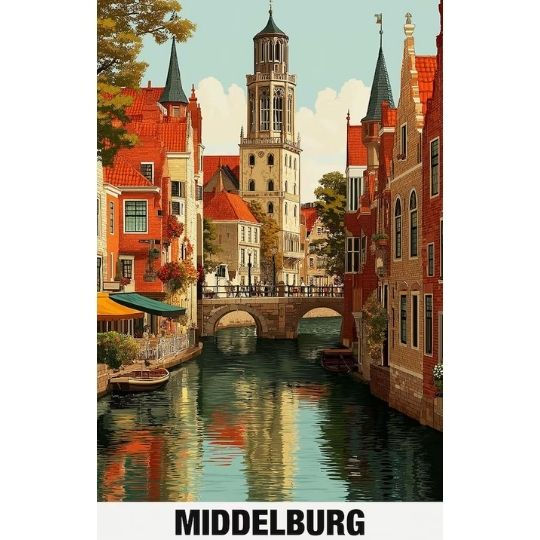
But Zeeland is more than just dams. Middelburg, the former capital of merchants and sailors, has preserved the atmosphere of the Dutch East India Company era, when ships set sail from here to the farthest shores of the world.
Vere feels like a city that accidentally lost several centuries and still lives on. And Zierikzee, with its gates, towers, and hundreds of historical monuments, reminds us that the sea brought here not only storms but also wealth.
And yet, the main impression here isn't created by any single city or monument. It's created in the evening, when you stand on the dike between the sky and the North Sea and realize: much of this land exists because humans once refused to admit defeat before the water.
ZEELAND: COAT OF ARMS' HISTORY
A true Dutch lion who has learned to negotiate with the sea.
Zeeland is the most maritime of the Dutch provinces. It is a world of islands, dikes, estuaries, and horizons, where land and water have been endlessly negotiating boundaries for centuries.
The name itself literally means "sea land" or "land of the sea." It's no surprise that the region's history has always been shaped less by politicians and armies than by the tides, storms, and the tenacity of the people who chose to live where nature regularly reminds them who's in charge.
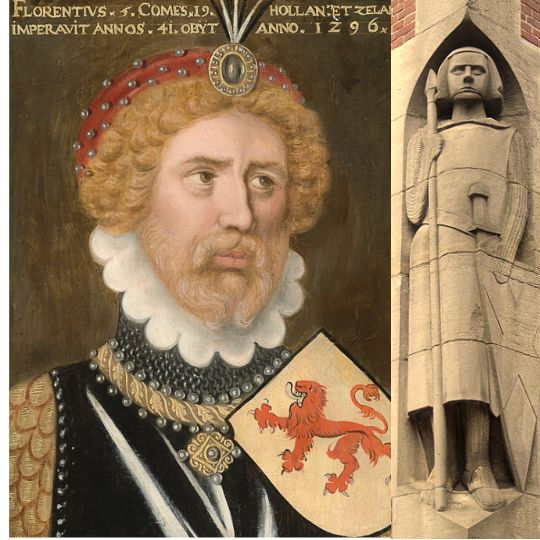
The history of Zeeland as an independent political region begins in the Middle Ages. For a long time, these lands were the subject of disputes between the counts of Holland and Flanders: the islands were too conveniently located for either to voluntarily relinquish control. Gradually, the Dutch counts gained the upper hand, and one of the most notable rulers was Floris V (1254–1296), known by his contemporaries as the "god of the peasants" for his support of the common people.
However, Floris's fate demonstrates that popularity with the people does not always guarantee the love of the nobility. The count was kidnapped and murdered by his own vassals, and his death became one of the most famous political dramas of the medieval Netherlands. Among the conspirators, Gijsbrecht IV van Amstel, an influential feudal lord and participant in the kidnapping, stood out.
History can sometimes be surprisingly unfair: Floris is remembered as a wise ruler, but it was Gijsbrecht who later became a literary and theatrical hero. Thanks to Joost van den Vondel's famous drama, his name remains familiar to every lover of Dutch culture.

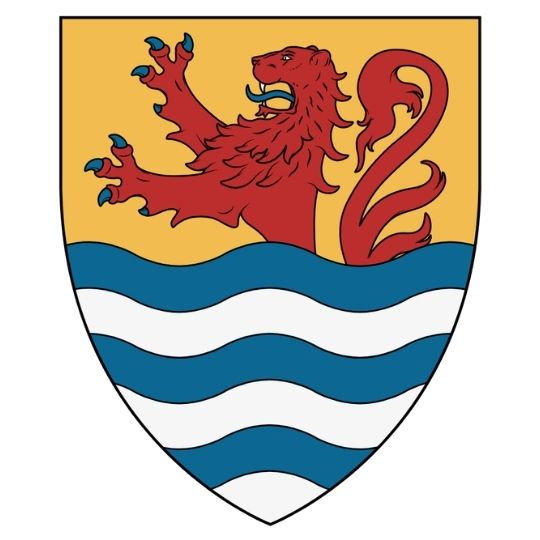
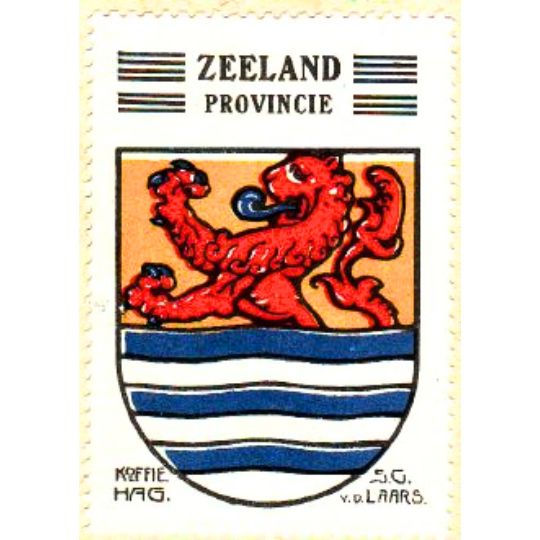
Looking at Zeeland's coat of arms today, it's easy to see the obvious theme: a red lion literally fighting the sea. It seems as if the artist simply took the region's history and depicted it as straightforwardly as possible. Especially since the famous motto "Luctor et Emergo" — "I fight and emerge" — is displayed alongside it.
But heraldry is rarely so literal. Originally, the lion and the waves did not form a single composition. They existed as two distinct symbols , only eventually uniting to form one of the most recognizable coats of arms of the Netherlands.
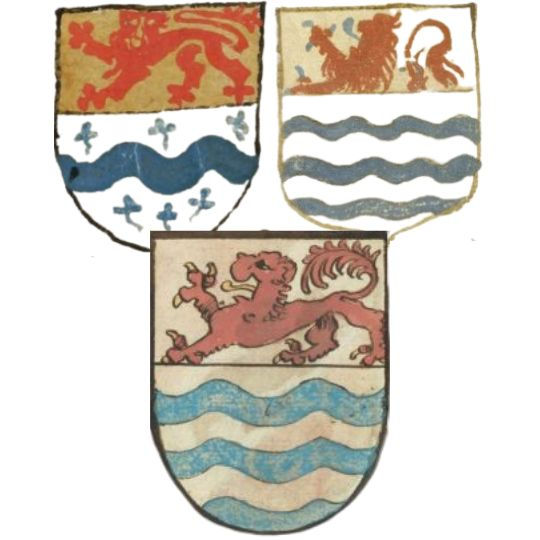
The earliest versions of the Zeeland coat of arms featured a horizontally divided shield. At the top was the Dutch lion, a symbol of the power of the counts of Holland. The bottom featured wavy stripes, representing the sea and the region's numerous straits. Such compositions were quite common in the 15th century. Heraldry readily conveyed the history of a territory through the combination of several distinct elements.
But gradually, artists began to perceive both halves of the shield as a single scene. Thus was born the image of a lion, seemingly emerging from the water, overcoming the elements. Formally, this is still the old coat of arms, simply interpreted with a new eye. Sometimes the most successful symbols emerge not from reforms, but from a clever interpretation.
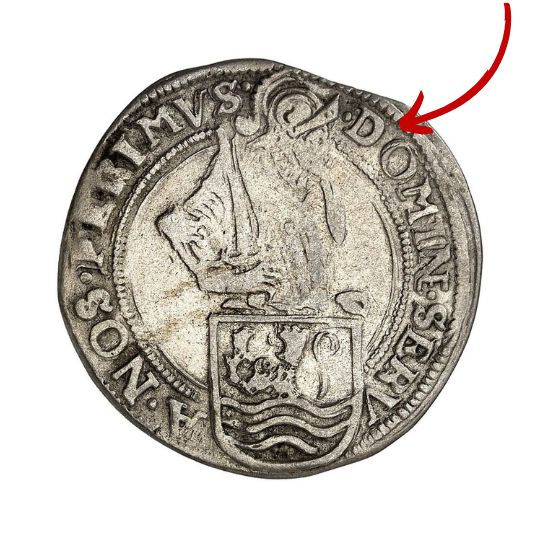
Today, even those unfamiliar with heraldry know the Zeelandic motto, "Luctor et Emergo ." However, the initial sentiment was noticeably less optimistic. On ancient coins one can find the inscription Domine serva nos, perimus – “Lord, save us, we are perishing.”
While this sounds fairly reasonable for a region regularly faced with storms and floods, it also seems somewhat hopeless. With such a slogan, even a sunny day begins to seem like a cause for alarm.
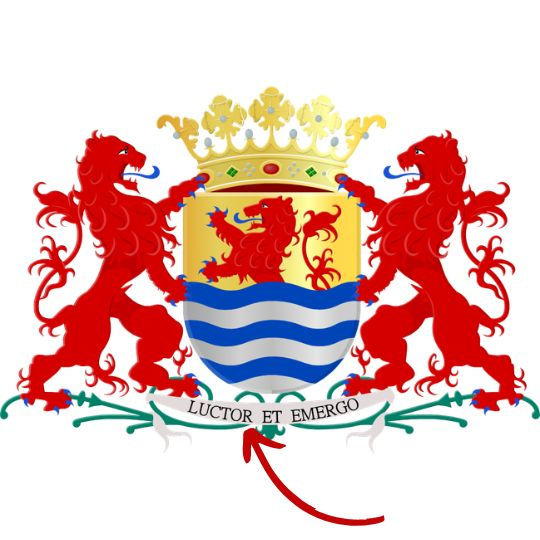
Later, a much more cheerful formula emerges: Autore Deo, favente Regina, Luctor et Emergo — "By the power of God and the favor of the queen, I fight and emerge." The queen here was none other than Elizabeth I of England — one of the most influential women of her era and a crucial ally of the rebellious Netherlands in the fight against Spain. You'll agree, it sounds quite different. Instead of the almost despairing "Lord, we are perishing," comes a confident: yes, the sea is advancing, the storms are endless, there are plenty of enemies, but we are still here.

Gradually, the long formula was reduced to two words — Luctor et Emergo. It's perhaps one of the most powerful mottos in European heraldry: short, stubborn, and surprisingly honest. Incidentally, for those who struggle with Latin pronunciation, locals have long since come up with a practical solution. In Zeeland, you can order Luctor et Emergo beer. After the second mug, memorization of the motto usually improves significantly.
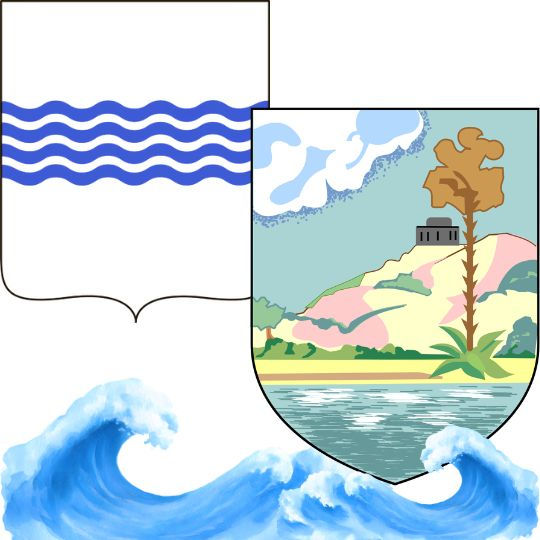
The sea often appears on the coats of arms of coastal and island regions, but in varying ways. One of the most laconic examples is the coat of arms of Basilicata, Italy. A pristine white shield features just four wavy blue stripes. No lions, crowns, or allegories. And although they actually represent the four main local rivers, the visual component is much stronger, as it is practically a perfect minimalism.
The complete opposite is the coat of arms of the Caribbean island nation of Antigua and Barbuda, designed between 1956 and 1967. It features sun, sea, islands, vegetation, and so many colors that even stern medieval heralds would surely have clutched their heads. However, it's hard to imagine a coat of arms that more powerfully conveys a tropical feel. Pure pop art: just looking at it, you can hear the waves, the sway of a hammock, and an irresistible urge to immediately find yourself under a palm tree.
The Zeeland coat of arms remains somewhere between these extremes. Strict enough for heraldry, yet vibrant enough to still tell amazing stories centuries later.
ZEELAND: FUN FACTS
Of that there are several "sea lands" on the world map, each with its own character and its own history of relations with the sea.
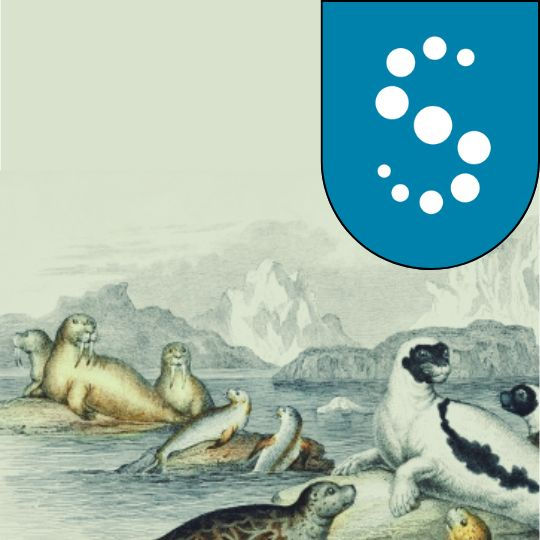
If you head north, you'll discover another Zealand — the Danish island of Sjælland, Denmark's largest island and home to Copenhagen . The origin of its name is still debated. Some attribute it to ancient words meaning "sea," others to the seals that have inhabited the local shores for centuries. The seal theory is particularly appealing: it would seem that the Danish Zealand literally means "seal land."
There is a noticeable difference in character here: the Dutch built dams, the Danes watched the waves, and the seals probably considered both to be temporary tenants of the coast.
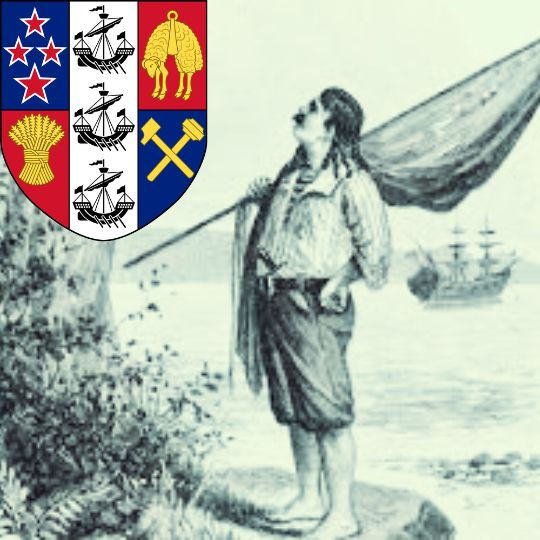
Moving even further, almost to the other end of the planet, New Zealand appears. It received its name thanks to 17th-century Dutch cartographers, who named the discovered land Nova Zeelandia after their native province. The first European to reach its shores was the Dutchman Abel Tasman — the man whose name is now given to a sea, an island, and a whole host of other geographical features.
Ironically, Tasman himself hardly imagined how apt the name would prove. As a result, the small province on the edge of the North Sea gave its name to one of the most beautiful countries in the world. Quite an achievement for a region that spent much of its history struggling not to sink.
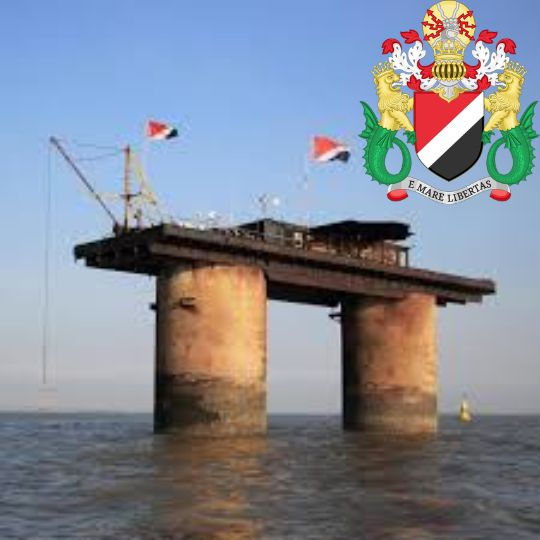
Sealand, however, decided not to wait for geography's favor and created its own maritime territory. In 1967, former British Major Paddy Roy Bates declared an independent state of an abandoned offshore platform in the North Sea, ten kilometers off the coast of Great Britain.
Thus arose the Principality of Sealand — a place with a prince, a flag, a coat of arms, a constitution, noble titles, coups d'état, and even international scandals, but virtually no country in the traditional sense.
Sealand's history is so incredible that at times it resembles an adventure novel written by someone who fundamentally rejects the word "impossible." There have been invasion attempts, diplomatic negotiations, passport sales, its own government-in-exile, and even the idea of selling the entire state.
Meanwhile, the platform remains standing in the middle of the sea, as if to remind people that some people see water as an obstacle, some as a path, and some as an opportunity to found their own principality. And while Zeeland is fighting the sea, Sealand seems to have simply decided to befriend it and play a little prank on the rest of the world together.
ZEELAND: LOCAL HERALDRY
A coat of arms that looks like a math problem, a mysterious bottle by the sea, and simply a coat of arms with a happy ending.
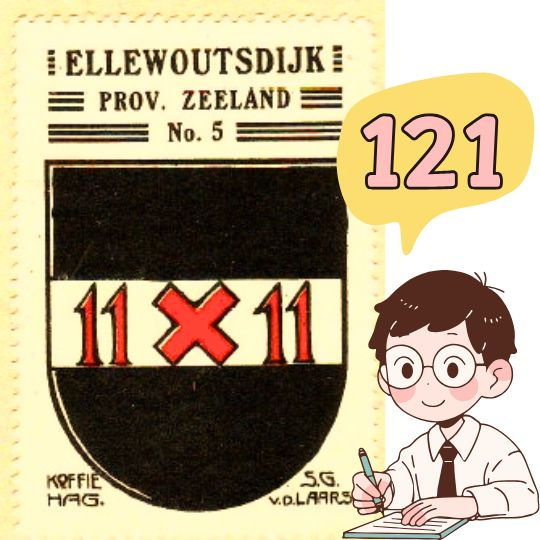
Ellewoutsdijk is a tiny village in the south of South Beveland, home to fewer than four hundred people today. Yet, the local coat of arms is enough to baffle even heraldry experts. A silver dam runs across a black field, and two numbers, 11 and 11, are mysteriously positioned on either side of the cross.
Historians still debate its meaning. Some attribute the combination to ancient signatures of illiterate officials, others to the results of local elections, and the most beautiful theory derives it from the old name of the village — Elfsdijk, meaning "Eleventh Dike." The result is a remarkable coat of arms that looks less like a noble emblem and more like a fragment of an ancient mathematical puzzle.
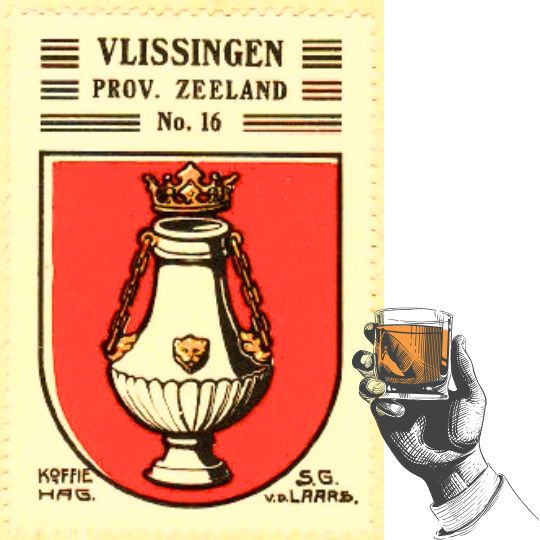
Vlissingen has lived by the sea for centuries: fishermen, merchants, Dutch East India Company ships, and an endless stream of travelers passed through this port at the mouth of the Scheldt. Perhaps this is why its coat of arms features one of the most unusual symbols of the Netherlands — a silver pilgrim bottle on a red background .
According to one legend, it was left here by Saint Willibrord, who gave 12 beggars something to drink, but the bottle they drank from remained empty. He eventually left, noticing that the beggars didn't want to listen to his gospel. Although it would have been logical to preach first and then give them something to drink. Another legend ties it to the city's name, which derives from the old word flessche ("bottle"). There's even a folk saying about how the Spanish Duke of Alba first lost his glasses in Den Briel, and then his bottle in Vlissingen — meaning he retreated from these cities during the Dutch Revolution. In any case, we have before us a rare case of an entire city deciding to make its symbol not a lion, an eagle, or a fortress, but a purely everyday object .
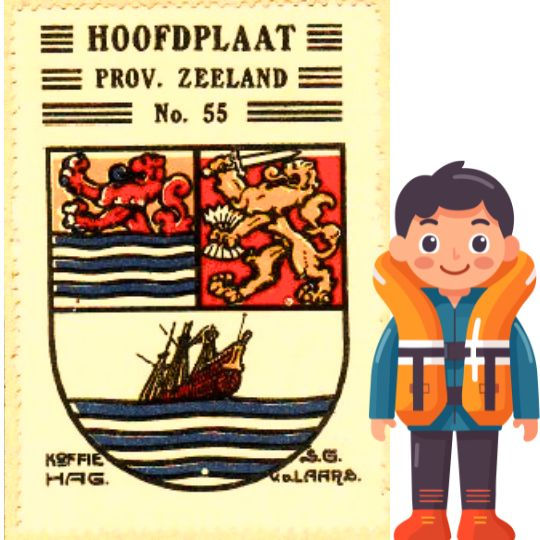
The small Hoofdplaat on the Western Scheldt has perhaps the most dramatic coat of arms in all of Zeeland. Its lower part depicts a ship sinking in the waves. At first glance, it seems as if the locals have decided to commemorate some particularly unfortunate boat trip.
In reality, it's much more interesting. This ship symbolizes the centuries-long battle with the sea and the constant loss of land due to floods. The upper part of the coat of arms depicts the lions of Zeeland and the Republic of the Seven United Netherlands, while the lower part reminds us that much of this land was once underwater. Therefore, the sinking ship here isn't a tragedy, but rather a prologue. The main story begins afterward: people eventually built dams, drained the polder, and founded a village where the sea once reigned.


Comments