VAUD
Updated: 4 days ago


Vaud is the canton of Lausanne and the Lavaux vineyards: Lake Geneva, university life, and beautiful terraced landscapes where Alpine nature meets French atmosphere. For this reason , Vaud is often called the "Swiss Riviera".
VAUD: ICONIC LANDMARKS
The terraced vineyards of Lavaux above Lake Geneva are one of the most beautiful places in the country.

The canton of Vaud stretches along the northern shore of Lake Geneva , where the water reflects both vineyard terraces and the distant peaks of the Alps. Here, the landscape seems to be built in steps from the Jura Mountains to the lake and beyond to the snow.
The canton's main axis runs along the Lausanne-Vevey-Montreux line. Lausanne rises above the lake with steep streets and stone staircases, where medieval quarters coexist with Olympic symbols and university buildings.
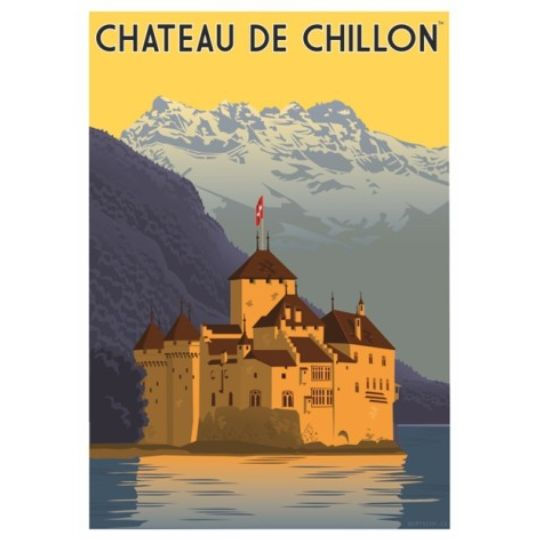
To the east begins the Lavaux region — famous vineyard terraces cut by narrow roads between stone walls. Here, villages seem suspended between water and sky. The most recognizable silhouette of Vaud is the Château de Chillon, standing right at the water's edge. Its towers are reflected in the lake almost exactly as they were two hundred years ago, when Byron transformed the fortress into a literary symbol.
Lausanne, the cultural and Olympic capital of Switzerland, attracts visitors with its museums, theaters, historic buildings, and modern architectural masterpieces. Festival lovers will love the canton's festivals, including the Montreux Jazz Festival, the Nyon Film Festival, the Morges Tulip Festival, and the Chaplin's World Festival in Vevey
Vo feels like a seamless space between the mountains and the water. Here, distances are measured not in kilometers, but in a smooth transition from the vineyard to the pier and beyond to the line of snow-capped peaks.
VAUD: COAT OF ARMS' HISTORY
The canton's motto reflects the idea of freedom and independence.

The territory of Vaud gradually came under the control of the Counts of Savoy in the mid-13th century. It was Savoy that first gave the region its own coat of arms: initially featuring the imperial eagle — a reminder that the land formally belonged to the Holy Roman Empire.

In 1306, Ludwig II, Lord of Vaud, modified the symbolism by adding a baldric to the Savoy shield. Even when the region returned to direct control of the House of Savoy, this version of the coat of arms remained.

At the beginning of the 16th century, a new, unexpected symbol appeared — a black mountain, known from a stained-glass window of 1530. After the territory was captured by Bern in 1536, this mountain became a political symbol: it was added to the coats of arms of the Dukes of Savoy as a reminder of their claims: they looked upon it and lost their peace.

The 18th century changed everything. In 1798, under the influence of the French Revolution, the Lemannic Republic was proclaimed in Lausanne. It was probably one of the shortest-lived republics in history. It lasted less than three months before becoming part of the Helvetic Republic, and in 1803, the Swiss Confederation. However, it managed to create a green flag with a revolutionary motto. This became the basis for the future cantonal symbols.

In 1803, the new canton of Vaud adopted its coat of arms: a green and white shield bearing the motto "Liberté et Patrie" — "Liberty and Fatherland." The colors were arranged differently than in the original design, but this version became the classic. In the 19th century, the black letters were replaced with gold. And although for a brief period the coat of arms was even adorned with cannons and military paraphernalia, these embellishments were soon abandoned.

In a French engraving from the Revolution, the motto "Liberty, Equality, Fraternity" is supplemented with another, more interesting line: "Ou la mort" ("Or death"). This was an era when slogans became almost oaths, and freedom often demanded a high price.
The Swiss, observing this storm through Lehmann, approached matters more cautiously. They retained the idea of freedom but abandoned its extreme connotations. "Equality" and "Brotherhood" sounded too revolutionary and could only lead to internal upheaval and guillotines — the experience of their neighbors was too fresh. Therefore, the slogan was reformulated as the more stable and constructive "Liberty and Fatherland."

And a small heraldic "but": according to classical heraldic rules, there should be no inscriptions on the shield. A motto is typically placed beneath the shield, on a ribbon, or as a separate element of the composition. But the canton of Vaud has approached its identity unconventionally from the very beginning.
The coat of arms was created in a special era — an era of slogans, declarations, and the desire to express oneself openly. As a result, the motto appeared directly on the shield, contrary to canon. Nevertheless, the overall result is surprisingly harmonious.
VAUD: FUN FACTS
Of that everyone loves to be first, but even more they love to elegantly explain why they are almost first.
Being "the very best" is a natural human desire. And for regions, it's almost a strategic necessity: it sounds appealing, attracts attention, and attracts more tourists. The Canton of Vaud approaches this with subtlety and a hint of humor. Here, they'll confidently tell you that they have the country's first university, oldest monastery, and oldest shipping fleet. And then, if you take a closer, the fun begins.
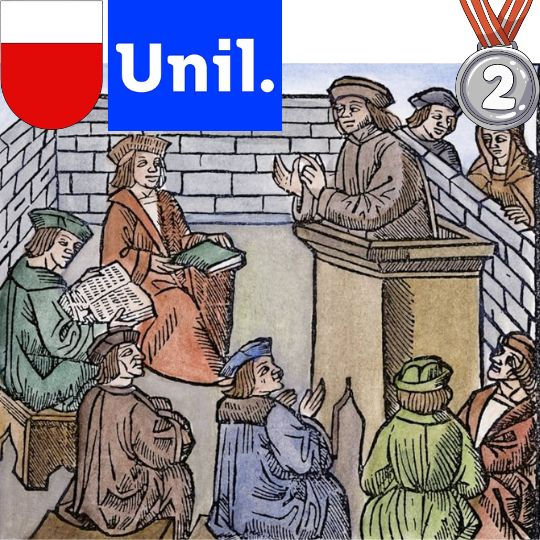
The university case is almost convincing. In 1537, an academy did indeed appear in Lausanne — at first theological, strict, and Protestant. Over time, it grew into a full-fledged university, and today it's a place where ideas are born, not just lectures. But there's a caveat: formally, Basel, founded almost a century earlier, remains the oldest university in Switzerland. Waugh, however, doesn't dispute this — he simply emphasizes the "spirit of innovation."

With monasteries, things are even more elegant. Romainmôtier, founded in the mid-5th century, looks like a serious claim to antiquity: stone, silence, architecture with a Burgundian accent. An almost perfect candidate for the title of "oldest." But then Saint-Maurice in Valais appears and calmly declares, "By the way, we haven't stopped since 515." And the debate turns philosophical: what's more important — age or continuity?

Steamships have a literary history. Lake Geneva is still home to snow-white Belle Époque vessels — with wooden decks, copper, and a subtle sense that time slows down. Vaux proudly calls this the oldest active fleet. And that's almost true. Although the oldest steamship in Switzerland, the Griff, was built in 1895 and sailed on Lake Greifensee, the oldest flet, comprising five historic steamships, is on Lake Lucerne.
Perhaps this is Vo's main secret. He doesn't strive to be first so much as he knows how to create the feeling that everything has come together perfectly here: knowledge, stone, and water. The rest are just details that are pleasant to discuss over a glass of local wine.
VAUD: ALPINE SKIING
The resorts of Leysin, Villars and especially the Les Diablerets glacier are popular with skiers.

Situated in the heart of the Alpes de Vaud, the resorts of Villars, Gryon, and Les Diablerets are interconnected to form a ski area with over 80 km of slopes. There's something for skiers of all skill levels. At the summit of Glacier 3000, the highest point in the canton of Vaud, snow conditions are ideal from November to May.

People come to these cozy resorts for a relaxing, family-friendly getaway. Situated on a sunny plateau, they offer stunning views of the Rhône Valley. While they lack the frantic pace and crowds of larger resorts, they offer a friendly atmosphere and excellent opportunities for beginners and families with children. These areas are also renowned for their thermal springs. After an active day, you can relax in the hot waters with views of the snow-capped peaks. The perfect recipe for total relaxation!

Leysin is a true magnet for sun-seekers in the mountains. The resort is located on a south-facing slope, meaning it enjoys almost constant sunshine, perfect for skiing and relaxing on the terraces. Although small, it has everything you need for a great time: slopes for all levels, a fun park, and, of course, stunning views of Lake Geneva and the French Alps.

But Leysin's main attraction is the revolving Kuklos restaurant at the summit, which makes a full rotation every hour and a half. Can you imagine dining with a constantly changing panorama? For those looking to expand their skiing experience, Leysin offers a convenient ski bus that takes you to the Les Mosses-La Lecherette ski area in 10 minutes — an additional 40 km of pistes, for a total of 100 km.


Comments