TYROL
- Mar 29
- 6 min read
Updated: Apr 1


Tyrol is classic Alpine Austria, with Innsbruck, glaciers and endless mountain valleys, where tradition, sport and a sense of altitude shape the region's character – austere yet surprisingly vibrant.
TYROL: ICONIC LANDMARKS
Innsbruck and the surrounding valleys are the Alps in their canonical form, without compromise.

It's impossible to imagine Tyrol without the Alps. Mighty peaks, wild gorges, and ancient landscapes invite you to listen to the beating heart of the Alps.
It can be heard even against the backdrop of the famous throat singing "yodel" , which has long been used as an effective means of voice communication with a distant subscriber in the mountains.

Of course, Tyrol is primarily Innsbruck , which is not only the administrative center but also a resort where you can enjoy mountain scenery and beautiful architecture. The city attracts visitors with its ancient buildings, especially the famous "Golden Roof." It's a pleasure to stroll along the picturesque streets and take the funicular up the mountains, enjoying the views of the Inn Valley.
Ambras Castle, located near Innsbruck, has a long history and many interesting architectural features. Built in the 16th century, the castle originally served as a residence for Austrian rulers. Today, it houses a museum housing collections of weapons, art, and historical artifacts.
TYROL: COAT OF ARMS' HISTORY
The Tyrolean eagle is one of the most recognizable symbols, symbolizing an independent character.

Tyrol is a mountainous land that for centuries stood at the crossroads of European passes.
Whoever controlled the Brenner Pass in the eastern Alps controlled trade between the north and Italy — and the Tyrolean counts took advantage of this to great effect.

Tyrol thrived on forges, mining settlements, and endless negotiations over who actually owned it. The Habsburgs only gained it in the 14th century, but the locals always defended their freedoms and customs more strongly than any castle.

Despite the fact that eagles are found in heraldry almost more often than lions or crosses, it is this feathered mountaineer that has earned its own name - "Tyrolean eagle" .

Its first known depictions date back to the 13th century and the time of Count Albrecht III, a member of the Tyrolean dynasty. It was during his reign that the estates around the family castle near the town of Merano — now part of South Tyrol, part of Italy were consolidated.
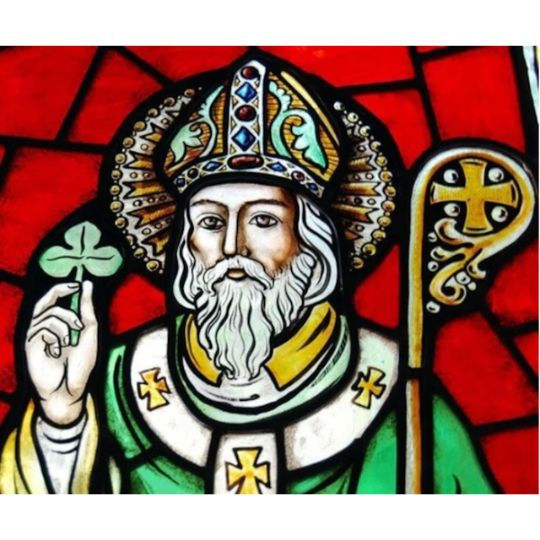
A curious detail deserves special attention: the yellow arches on the eagle's wings. Some researchers see them as a representation of a clover, an ancient symbol of good luck. However, this clover is a three-leaf clover, meaning it symbolizes St. Patrick rather than good fortune.

Another version offers a far more prosaic explanation: in the Middle Ages, coats of arms were often not painted, but cut out of leather and attached to armor with arched clamps. Sometimes they were painted over, sometimes, conversely, highlighted in gold. Thus, a random detail of craft practice became an integral part of Tyrolean heraldic poetry.

When the County of Tyrol became part of Austria, the eagle was given new regalia for its loyalty and perseverance: a count's crown and a laurel wreath — a symbol of glory worthy of ancient heroes. Later, these elements came to be seen as a reminder of the Tyrolean people's struggle for freedom during the Napoleonic Wars.
Thus, the eagle, accustomed to soaring over the Alps, became a symbol of fortitude and inner independence – qualities without which neither Tyrol nor its people could survive among the rocks and storms.
TYROL: FUN FACTS
Of how geography and meaning sometimes go their separate ways in Tyrol.

The town of Jungholz is a place where the map becomes a little uncertain. Formally, it's part of Tyrol, but in fact, it's located within Bavaria. Accessible only by German roads, it creates an almost philosophical conflict: to get "home," you must first leave for another country. There is, however, an Alpine loophole — the peak of Sorgschrofen (1,636 meters), the only link to the rest of Tyrol. Plus, there are two postal codes and about three hundred residents who live at the intersection of these systems and, it seems, have long since ceased to see the contradiction.

Rattenberg is the smallest town in Austria, a town that seems condensed to its essence. Four hundred residents and an area comparable to a small park. You can walk through it in the time it takes your coffee to cool, and yet it remains a town: with a town hall, with history, with a castle perched above the rooftops. Here, glass is blown, as if capturing the fragility of a moment, and in winter, a Christmas market is held without electric lights. Only fire, stone, and shadows — a reminder that scale isn't always measured in kilometers.

And finally, Namlos is a village with a name that literally means "Without name" (in German). According to one theory, it originated from the old name Amel, but over time it faded into obscurity. Today, it's almost a philosophical gesture: a place where fewer than a hundred people live, but there's a fire brigade, music, and a life that needs no grandiose designations. In the mountains, where everything is crystal clear — snow, rock, sky — a name can truly be superfluous.
TYROL: ALPINE SKIING
Tyrol is classic Austrian skiing at its best: high mountains, iconic resorts, and the kind of skiing that makes the word "vacation" sound too modest.

Sölden exudes scale and energy. Altitude, glaciers, and a touch of Bond chic — everything here works for effect. The resort is nestled in the Ötztal Valley and ascends to three-thousanders, among which the Gaislachkogel is almost an iconic peak.

Two glaciers create the feeling of a "perpetual season": skiing here starts early and ends late.
The runs are long, varied, and offer a good gradient. You can spend a day moving from one area to another, with little repetition. IceQ is a special story: a panoramic restaurant familiar from James Bond films.
Sölden doesn't hide its spectacularity. It emphasizes it. And that's precisely what makes it so captivating.

Ischgl combines serious skiing with a vibrant lifestyle. A resort where skiing is only half the program, and the other half begins after sunset. The vast Silvretta Arena connects the Austrian and Swiss sides, and skiing here easily turns into a cross-border adventure.

Altitudes over 2,000 meters provide reliable snow, and the pistes are that "Alpine standard": wide, fast, and perfectly groomed. But the main thing is the atmosphere. Concerts, parties, après-ski that sometimes eclipses the day itself. Ischgl is not for silence. It's for those who want to experience the mountains at full volume. And you can also pop to Switzerland for a quick trip to the duty-free zone. And return in style on a luxurious double-decker lift.
Kitzbühel is a classic. A legendary resort where the runs have names and mistakes have consequences. Narrow streets, a stylish crowd, and the Streif piste, known even to those who have nothing to do with skiing. As one expert said, "If you're lucky enough to see a competition on the Streif, remember that this isn't a struggle for survival, but a sport." The ski area is large and diverse, but its essence lies in its character. People don't ski here so much as "test their skills."

The Hahnenkamm isn't just a competition, but an event around which the resort's reputation is built. At the same time, there are also quiet routes and family areas — the balance is striking. Kitzbühel isn't about the number of kilometers. It's about status and an experience you want to repeat. And, of course, a souvenir with a goat elevates prestige to unattainable heights.
Of course, "Autoheraldry" couldn't ignore the ski lift, which has priority in traffic.

In the small village of Navis in Tyrolean Wipptal, a ski lift crosses a local road. This particular passage is controlled by a barrier: drivers have to wait until the mostly very young skiers pass. Many Tyrolean ski aces learned to ski on such lifts. With this in mind, drivers patiently let the future champions pass.


Comments