BERN
Updated: 7 days ago


Bern is the capital of Switzerland and one of its largest cantons: a medieval city, the country's political center, and home to ancient legends about bears that sound almost as serious as government decisions.
BERN: ICONIC LANDMARKS
The medieval old town and the panorama of the Alps make the capital one of the most beautiful in Europe.

The canton of Bern is divided into three parts: the Bernese Mittelland, a fairytale town nestled among forested hills (including Emmental, the famous cheese), Seeland (the three-lake region), and the Bernese Oberland, the most mountainous and most popular region among tourists.
Bern, the capital of Switzerland, has a bear-like temperament and a surprising sense of proportion. It doesn't overwhelm with grandeur, but rather reassures with tranquility. The Old Town, nestled within a meandering curve of the Aare River, resembles a carefully opened sandstone book.

The six kilometers of arcades in the center of Bern are more than just a shelter from the rain, they're a way of life. Here, people stroll, discuss politics, and buy cheese and watches with true metropolitan dignity. The clock tower, with its moving figures, puts on a miniature performance every hour—an almost ironic reminder of the precision of time.
The terrace of the Federal Palace overlooks the river and hills — democracy literally towers over the landscape here. And if you walk to the Bear Park, you'll see the living symbol of the city. The bears are leisurely but confident — like Bern itself. In the Rose Garden, the city lies at your feet, like a carefully drawn plan. Bern doesn't try to please. It simply exists in its own rhythm — and therein lies its strength.
BERN: COAT OF ARMS' HISTORY
The city's symbol is associated with the legend of a bear hunt, which gave Bern its name.

Bern appeared on the map of Europe in 1191 , when Duke Berthold V of Zähringen decided to found a new city on a bend in the Aare River. The location — a high promontory surrounded by water — was convenient, easy to defend, and controlled trade routes.
In 1353, Bern joined the Swiss Confederacy . In the following centuries, it became one of the most influential cities in the union, gradually expanding its holdings. Bern's territory grew through alliances, land purchases, and military campaigns.

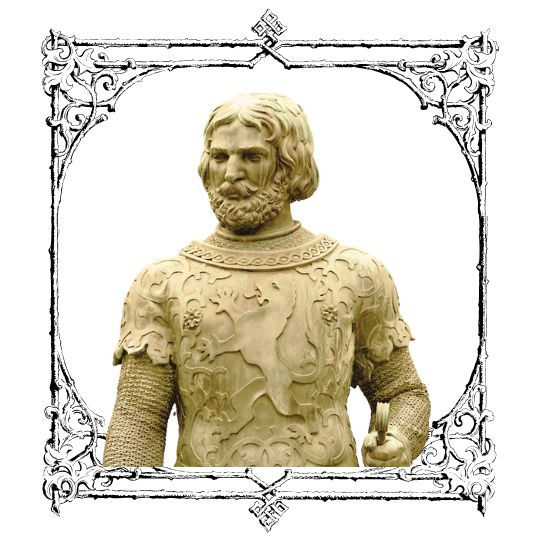
The legend of the hunt that gave Bern its name is associated with its founder, Duke Berthold V von Zähringen. According to chronicles, he promised to name the city after the first animal hunted in the surrounding forests. The bear , Bär in German (hence Berlin), proved a suitable candidate: large, imposing, and powerful. Thus, the bear became not only the city's name but also its heraldic symbol.

The earliest depictions of the Bernese bear date back to the 13th century. A city seal from 1224 already shows the animal striding to the right with a raised forepaw. The bear also appears on coins — copies from 1228 have survived. This is not yet a full coat of arms: the animal is depicted separately, without a shield or the usual diagonal band. But the symbol is already recognizable.

From a heraldic perspective, Bern's coat of arms is a classic "talking coat of arms." The city's name is literally illustrated by the image of an animal. Such solutions were popular in medieval heraldry: the symbol became the city's visual signature.

After the death of Berthold V in 1218, the Zähringen line died out, and Bern received the status of a free imperial city. Emperor Frederick II confirmed this with a special charter. From that moment on, the city began an independent political life. By the 14th century, the coat of arms had acquired its familiar appearance. A black bear appeared on a golden diagonal band on a red field. The colors red and gold are known from documents of the time and likely echo the family colors of the Zähringen family. Although a direct connection is difficult to prove, such coincidences in medieval heraldry are rarely coincidental.

Over time, Bern's coat of arms became a symbol not only of the city but of the entire region. When the modern administrative boundaries were established in the 19th century, the same bear also appeared on the canton's coat of arms. Today, it's hard to imagine Bern without the bear. It gazes from flags, adorns fountains and building facades, and greets tourists with souvenirs and gingerbread. It's rare in heraldry to find a symbol so closely associated with the life of a city.
The Bernese Bear has survived dukes, emperors, revolutions, and reforms. Its silhouette has remained virtually unchanged for 800 years. Sometimes it seems as if the city grew around this symbol — calm, confident, and slightly ironic.
BERN: FUN FACTS
Of the gender issue and vampire remedies.

In the US state of North Carolina, there's a city called New Bern . It was founded in 1710 by settlers from Switzerland who decided to start a new life on the other side of the Atlantic. Among them was Bernese Christoph von Graffenried, an enterprising and, apparently, slightly nostalgic man. The new city's coat of arms is almost identical to the Bernese: the same bear on a diagonal sash. There's a slight but noticeable gender bias, though. Puritan America preferred the bear, and apparently the New World decided that if they were going to start a new history, it might as well be at least a little more family-oriented.
Every year on the fourth Monday in November, Bern becomes the capital of… onions. The famous onion fair, Zibelemärit, takes place in the Old Town. From early morning, farmers from the surrounding area set up hundreds of stalls and begin selling onions and garlic braided into neat golden plaits. Around one hundred tons are sold in a single day.

As evening approaches, the fair turns into a celebration: firecrackers scatter confetti in the streets, children and adults stage mock "battles," and costumed people perform satirical skits in restaurants. The origins of this tradition are linked to the Great Fire of Bern in 1405, when farmers helped rebuild the city and were granted the right to sell at the market.
There is, however, a side effect: after consuming such quantities of onions and garlic, the Bernese become almost invulnerable to vampires. Even if some Transylvanian count were to stumble into the market, he'd quickly learn that it's best to keep a respectful distance in this city.
BERN: ALPINE SKIING
The Bernese Oberland region – Mürren, Wengen and Adelboden – is famous throughout the world.

The Jungfrau region is a true adventure triangle in the canton of Bern, centered on the famous Eiger, Mönch, and Jungfrau mountains. A beautiful legend is associated with these peaks: it is said that between a young man (the Eiger) and a beautiful woman (the Jungfrau) stands a monk (the Mönch), a monk who stands guard over virtue (or something like that).

Grindelwald impresses with its views of the Eiger's north face right from the village. Wengen, completely car-free, offers comfort and tranquility. And Mürren is a high-altitude fairytale with stunning panoramas. It was here, on the summit of the Schilthorn, that one of the Bond films was filmed, and the famous revolving restaurant Piz Gloria is still open today!

Gstaad looks like the set of a luxury film. Its cozy chalets and boutiques attract international celebrities, but don't let that fool you — there are slopes for everyone, from beginners to pros. Family-friendly ski lifts, kilometers of downhill runs, and the only glacier ski area in the Bernese Oberland offer winter sports from late October to early May.

What's truly unique is that every winter they host a snow polo tournament! Imagine: while you're enjoying the snow, you can watch horseback riders kicking a ball around on a special field right at the foot of the mountains.


Comments